 SASA
Architecture first, then code, then evals to check it works. 10+ years across infrastructure, cloud & data.
Each card has the key design decision, straight from the repo’s README.
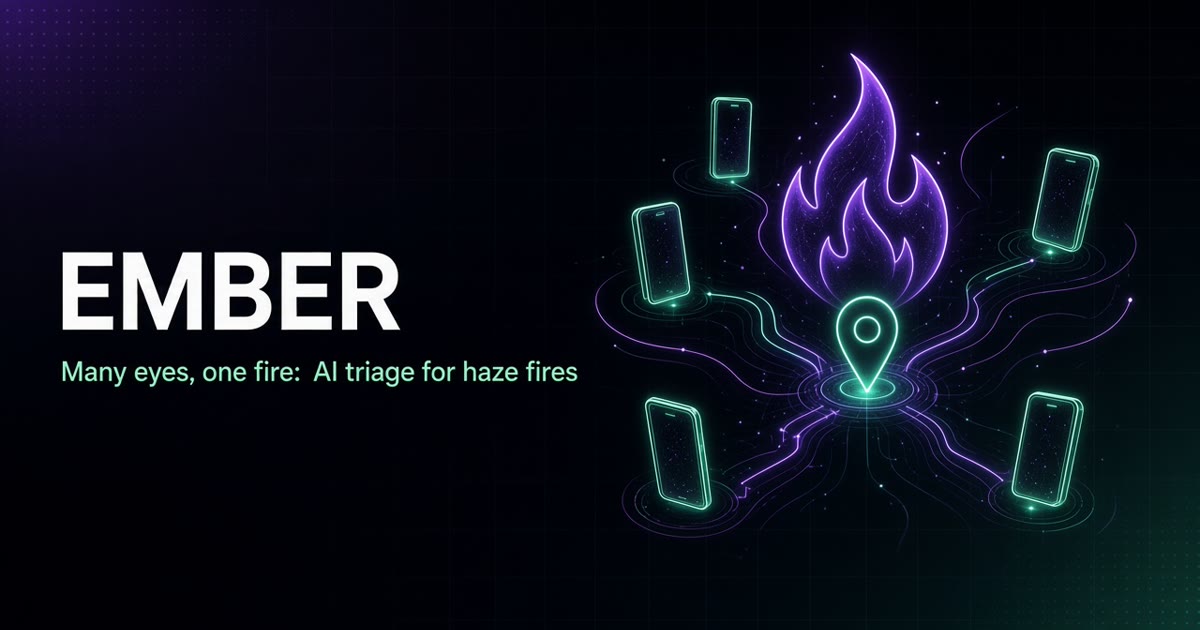
Bahasa-first AI fire commander for village brigades during Southeast Asian haze fires: ranks satellite detections by spread risk, with a volunteer app and supervisor console. Submitted; awaiting results.
Design: Agents fuse reports from many phones into one shared incident; a human supervisor approves every high-stakes call, and the WITHDRAW-upwind safety rule is deterministic code, not model output.
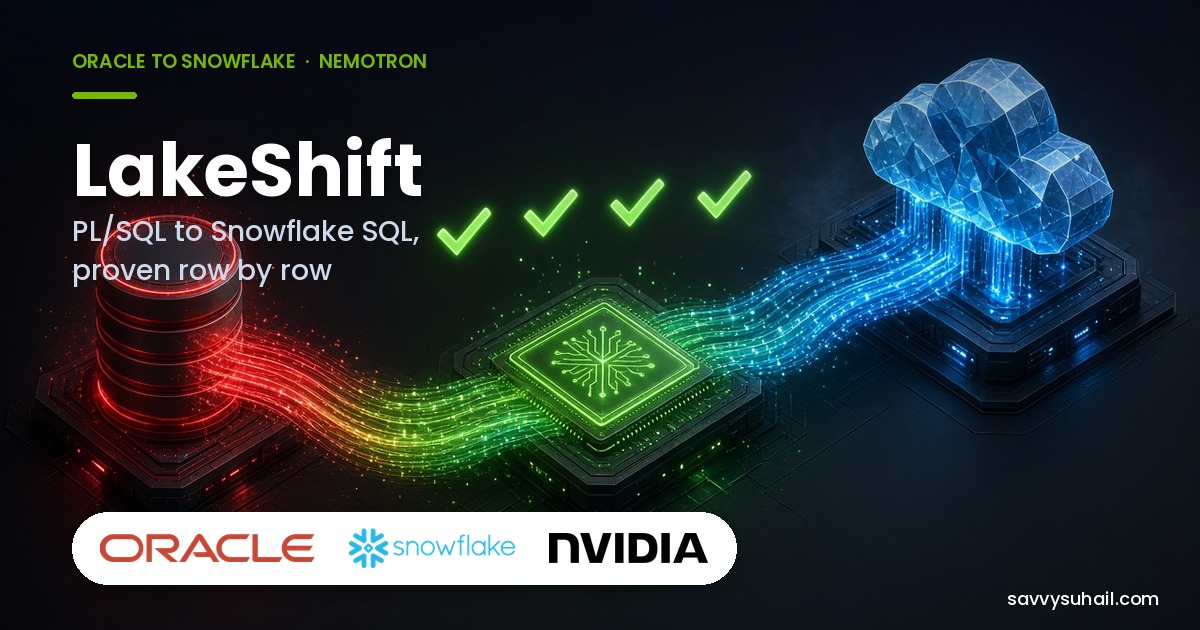
Translates legacy Oracle PL/SQL to Snowflake SQL with NVIDIA Nemotron on Nebius Token Factory, then proves every result row by row. On the recorded run: 6/6 objects proven equal, 5,685 rows compared. Nebius x NVIDIA hackathon; submitted.
Design: Planner → parallel Nemotron Nano translators → a verifier that diffs Oracle vs Snowflake row by row; failures go to a docs-only researcher and a fixer that escalates Nano, then Super, then Ultra until the verifier passes.
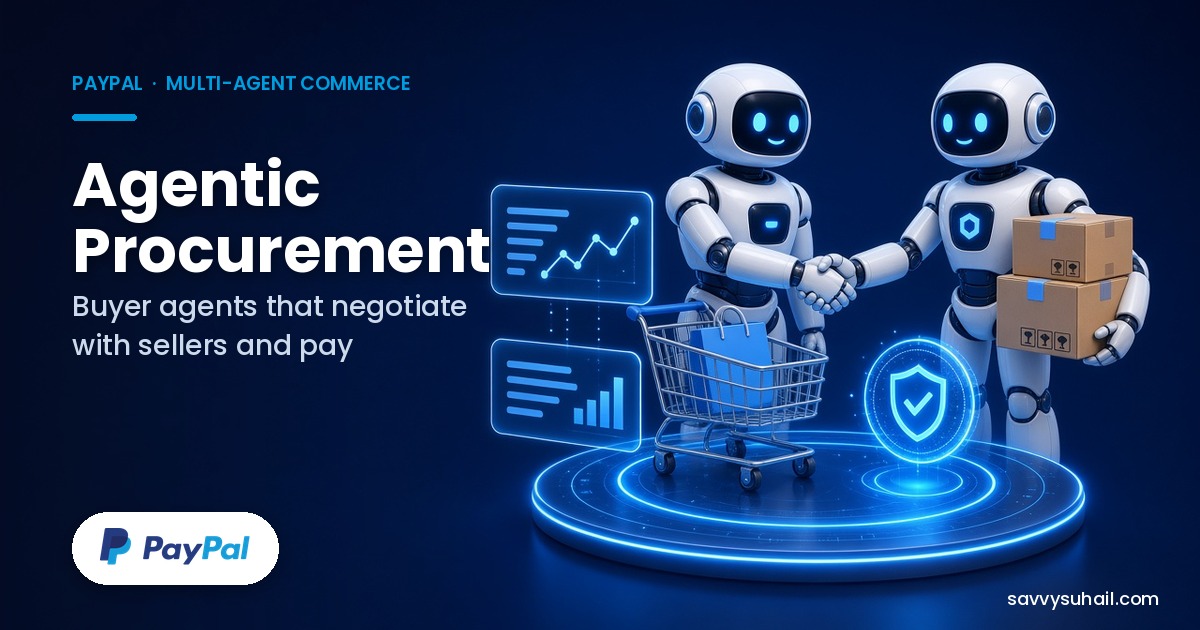
A buyer agent negotiates with seller agents and pays on PayPal: agentic procurement and payables for small businesses. PayPal AI Hackathon; building, submissions close Nov 12.
Design: Agents negotiate, but money moves through PayPal authorize-then-capture: funds are held on agreement and captured only once the deal is confirmed, so an agent never pays without a settled order.
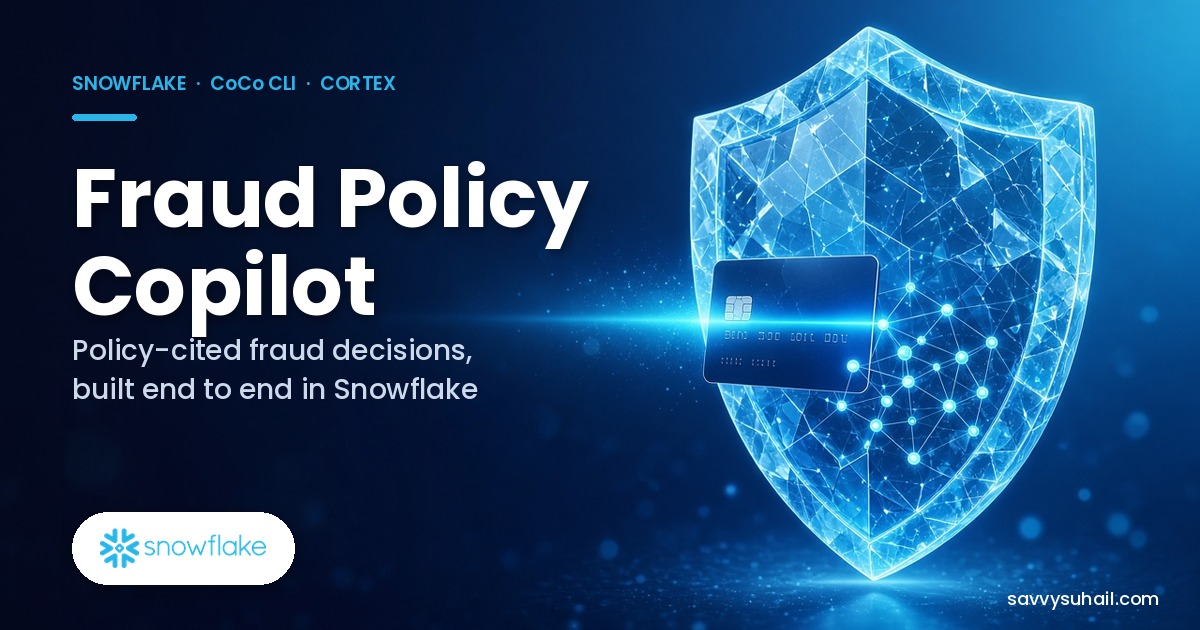
What you can build with Snowflake CoCo CLI + Cortex: flagged transaction in, policy-cited risk decision, fraud-ring map, case and native alert trail out.
Design: Streamlit in Snowflake: transaction id → customer context → rule matches → risk score with policy citations, then a case and a native Snowflake alert trail.
I sketch the architecture first, then build it, then measure whether it actually works.
This is where I share what I’m designing, building, breaking and learning: open-source labs, hackathon builds, and notes for fellow tinkerers.
A tiny terminal. Type help, or try router explain this stack trace.
Demo only: runs in your browser, no backend, no API keys. router picks a tier with simple keyword rules — the real llm-auto-router uses an LLM classifier.
Google Cloud · Hack2skill · submitted 18 Oct 2026 · evaluation 19 Oct – 6 Nov. Project: EMBER — weather-aware fire triage
PayPal · Nov 2026 · submissions close 12 Nov. Project: Agentic Procurement
Registered Oct 2026
RAG experiments on Databricks: table setup, CSV/PDF document ingestion, a RAG chain agent model, and a model GUI. Notebooks on GitHub
Fraud Policy Copilot: from a flagged transaction to a policy-cited decision, with the demo video.
How the LLM auto-router beat keyword rules. Project: LLM auto-router
Posts on LinkedIn; each links back to its project card here.
I started out automating VMs by the thousand, then moved into cloud migrations, landing zones and Terraform pipelines, then DevOps: Kubernetes, observability and lots of IaC. Now I design and build the AI layer. I care about evals and operational readiness more than demos. On my own time I design and build things to learn, starting from an architecture diagram. If it breaks, I write down why.
An Azure AI Foundry gateway I designed and implemented to manage, monitor and govern AI solutions: one place for model access, oversight and control.
AI agents I designed on the data platform that cut manual analysis for ops and business teams, plus AI for analytics and operational insights.
Evals, testing and operational readiness for AI apps; trying out Cursor and MCP with security and configuration first.
Scope only. Internal details and numbers stay at work.
10+ years in infrastructure, cloud & data · 9 certifications · 21 public GitHub repos